Description
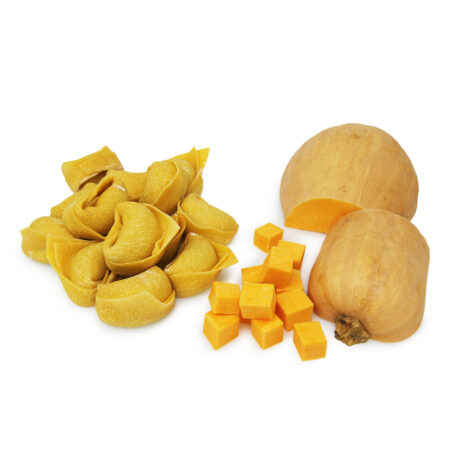
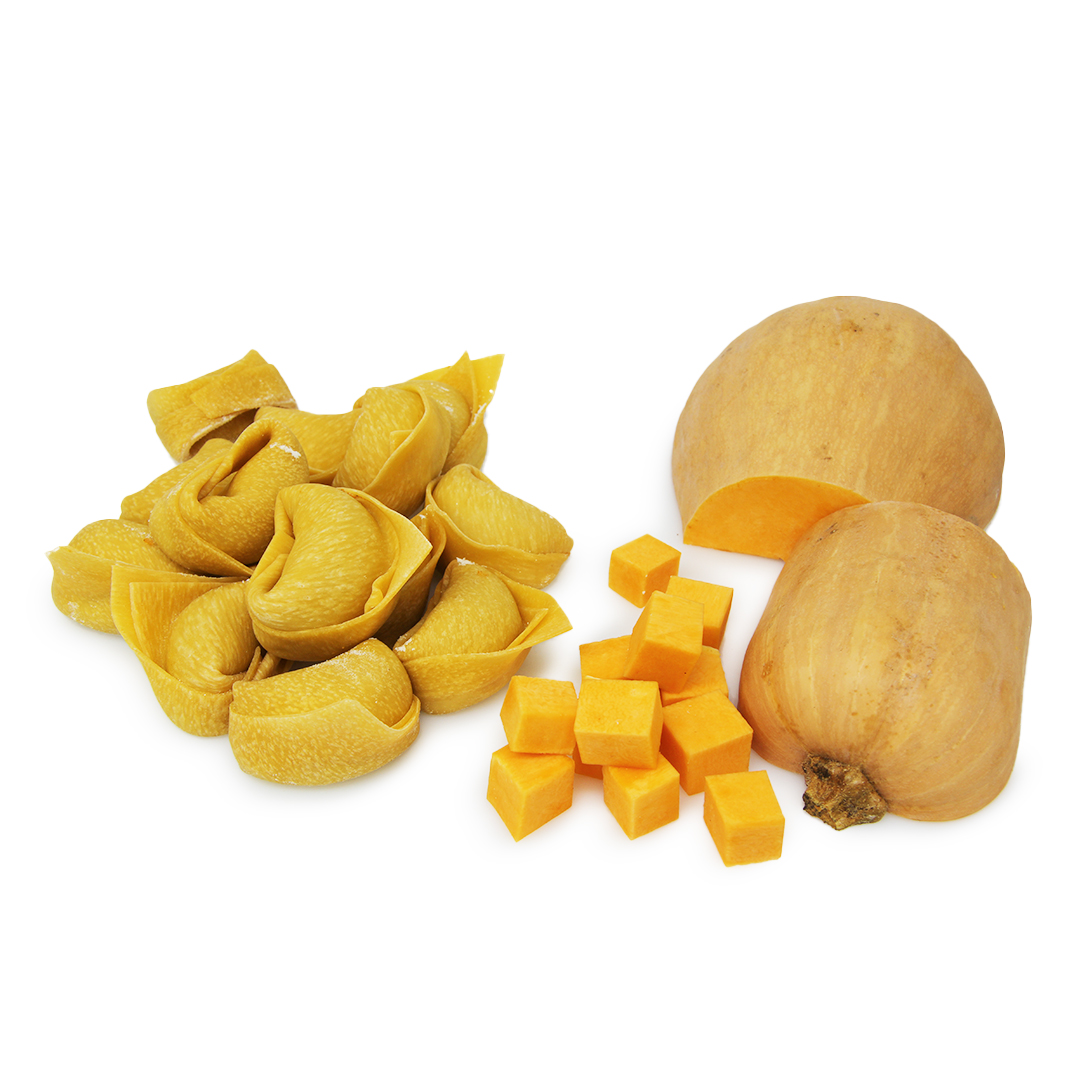
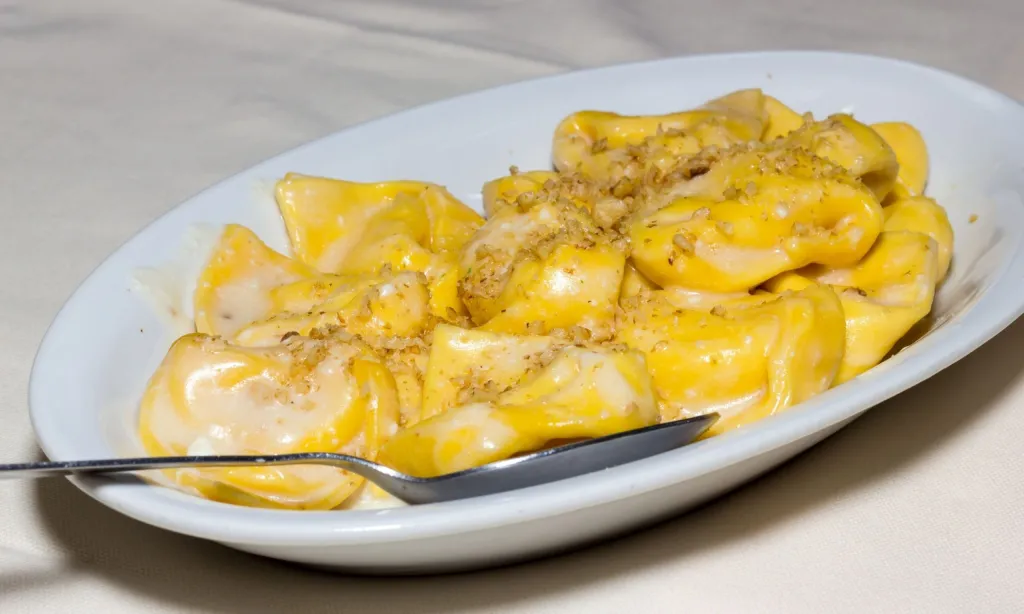
Ceccarelli artisanal pumpkin tortelloni
Order our delicious pumpkin tortelloni online, strictly handmade in our workshop in Bologna.
How are they made?
A small company on the outskirts of Bologna produces these fantastic tortelloni, or pumpkin tortelli closed by hand one by one.
The egg pasta is rolled out with a rolling pin by our pasta makers following the traditional recipe and top-quality ingredients:
- 00 flour
- Free-range hen eggs
- Pumpkin
- Pear mostarda
- Grana Padano PDO
- Nutmeg.
How to dress pumpkin tortelli?
We recommend dressing the tortelloni with butter and sage, to preserve the distinctive flavour of the pumpkin.
If you like, you can add a good aged Parmigiano Reggiano, whose savouriness will create a pleasant contrast with the sweetness of the filling.
Otherwise, in the Blog section of our website, we suggest our favourite variation:
Pumpkin tortelloni with orange butter, almonds and Parmesan shavings
WEIGHT approx. 500g
The suggested quantity is for 3 people.
SHIPPING THROUGHOUT ITALY BY REFRIGERATED TRANSPORT 24/48H
Our pumpkin tortelloni are packaged and shipped by couriers specialised in fresh product transport to guarantee maximum quality and freshness.
Delivery will take place within 24/48 hours of receiving the order (72H for the Islands and remote areas)
Once received, the product should be consumed within 3-4 days or frozen for a maximum of 6 months.
Storage conditions Storage: 0 / +4°C
Transport method Refrigerated transport: 0 / +4°C
History
When, in the 1500s, the first Spanish colonisers brought new plants back from the Americas, some of these — such as maize, potatoes, tomatoes and pumpkin — were hugely successful in an Italy devastated by wars, epidemics and famines.
In the Po Valley especially, these crops took hold quickly and well: pumpkin in particular became a symbol of festivities.
Pumpkin ripens between September and November and keeps easily for a long time. It has a hard rind that can become a handy container, and its seeds are edible.
Its flesh is used in cake batters, in risotto, fried, and as filling for ravioli filling.
Pumpkin, like maize, potatoes and tomatoes, soon became part of Italian culinary tradition.
From these beginnings a school of thought was born that still persists today, the cuisine of tradition: an essential cuisine, yet one that renews itself in technique thanks to local markets, giving (through the minimal use of spices) a unique and distinctive flavour; and, lastly, one that’s good for both health and the wallet.
In 1584, Count d’Este’s steward Gianbattista Rossetti described the cappellaccio in the Ricettario Pubblico Dello Scalco, then the turtell of Mantua: the differences are minimal — names change, sometimes shapes or a few ingredients too, but the underlying idea is always the same: pumpkin tortelli.
So in Mantua there are the turtell, in Piadena the turtèl con la sàlsa (tomato), in Casalmaggiore the blisgòon, in Cremona the tortèi de sòca, in Crema the turtèi cremàsch.
The filling is always made the same way: egg pasta sheet with pumpkin, mostarda, grana or Reggiano cheese and nutmeg filling.
The pumpkin tortelli are dressed with butter, sage and parmesan; in some cases with tomato sauce. The pasta is made in much the same way everywhere: flour, eggs, salt and warm water.
The sheet should be thin to medium-thin; the shape can be cappellaccio, round, square, rectangular, half-moon or twisted.
The tortelli should be cooked al dente and served on a warm plate.